
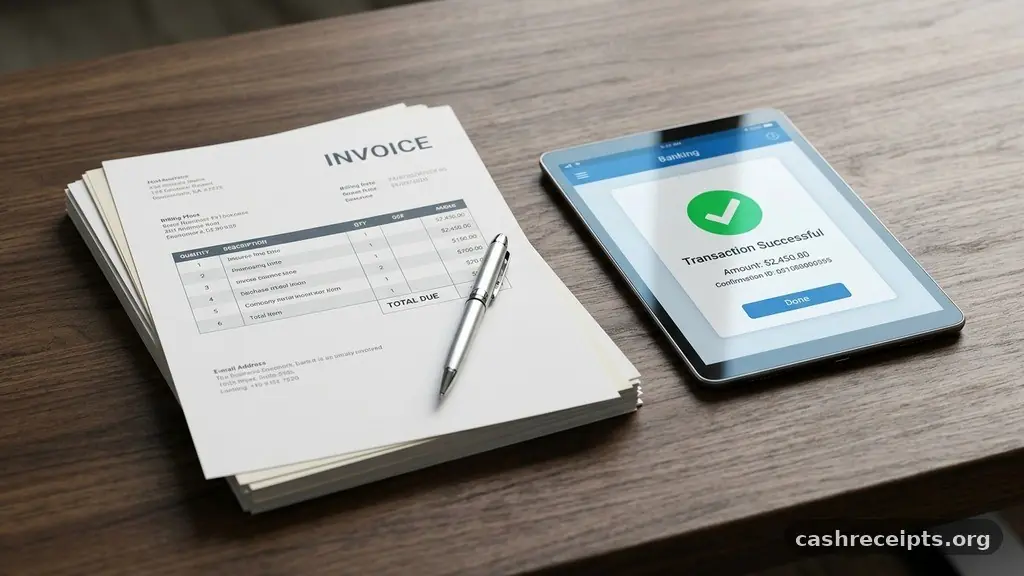
Understanding what is proof of payment? Common examples explained is essential for anyone managing personal finances or business accounts. At its core, this documentation serves as a verifiable record that a financial obligation has been settled between a payer and a payee.
Whether you are reconciling a bank statement or disputing an erroneous charge, having a clear trail of evidence prevents confusion. This article explores the various formats these records take, from digital receipts to formal bank statements, providing the clarity you need to keep your financial records accurate and secure.
Defining the Core Function of Payment Records
A proof of payment is any document or digital record that confirms the transfer of funds from one party to another. It acts as the final word in a transaction, bridging the gap between an invoice and a settled debt. Without this verification, both individuals and businesses risk financial discrepancies that can be difficult to resolve months later.
The primary purpose of such a record is to provide legal and accounting certainty. For a document to serve as valid evidence, it typically requires specific details such as the date, the amount paid, the currency, and the identities of the parties involved. If a dispute arises regarding whether a bill was paid, the presence of an itemized document usually ends the debate immediately.
Beyond simple record-keeping, these documents are vital for tax compliance and auditing. When you claim business expenses or deductions, tax authorities often require proof that the expenditure actually occurred. A simple entry in a ledger is rarely enough; you need the supporting documentation that links the transaction to a verified bank or credit card movement.
Common Examples of Transactional Records
When you ask what is proof of payment? Common examples explained often center on everyday documents you likely already receive.
The most frequent form is the point-of-sale receipt, which you get after purchasing items at a store. These slips detail the items bought, the total cost, and the payment method used.
Another standard example is the electronic transaction confirmation sent via email. Most online retailers generate these immediately upon the completion of a checkout process. They often include a unique transaction ID, which is invaluable if you need to contact customer support regarding a failed delivery or missing items.
Bank statements also serve as powerful evidence of financial activity. While they do not always list the granular details of a purchase, they verify that a specific amount left your account on a particular date. When combined with an invoice, a bank statement creates a complete picture of the transaction cycle.
- Point-of-sale printed receipts
- Digital transaction emails
- Bank account debit entries
- Credit card statement line items
- Formal wire transfer confirmations
- Cancelled checks or digital images of checks
The Role of Digital and Online Transfers
Modern finance has shifted toward digital platforms, making electronic proof of payment more relevant than ever. When you use a mobile app or an online portal to move money, the platform usually generates an automatic confirmation. These digital files are often more reliable than paper versions because they are timestamped by the server.
Peer-to-peer payment apps have their own way of tracking money movement. When you send funds to a friend or a merchant, the app stores the transaction history in your account dashboard. You can typically export these histories into a PDF format, which serves as a formal record for your personal bookkeeping or tax reporting.
It is helpful to understand how these systems handle metadata. Beyond just the amount, these digital files often capture the location of the sender, the device ID, and the IP address. This level of detail is a significant upgrade from the old-fashioned paper receipt, as it provides a multi-layered verification of the transfer.
Comparing Different Payment Proof Methods
Choosing the right type of documentation depends on the scale of the transaction and the legal requirements involved. A small coffee purchase requires only a simple slip, but a large real estate transaction requires certified documents. The table below compares how different methods stack up regarding detail and reliability.
| Method | Level of Detail | Primary Use Case |
|---|---|---|
| Paper Receipt | High (Items listed) | Retail shopping |
| Bank Statement | Low (Amount only) | General account auditing |
| Wire Confirmation | Very High (Bank verified) | Large business transfers |
| Digital Wallet Log | Medium (Transaction ID) | Online services and apps |
Each of these methods serves a distinct purpose in your financial life. While a credit card statement is excellent for tracking monthly spending, it rarely provides the itemized detail needed to prove exactly what you purchased. For that, you must rely on the merchant-provided receipt or the original invoice.
Handling Additional Charges and Taxes
When you review your proof of payment, you must look beyond the base price. Many transactions include additional charges, taxes, and service fees that can complicate your reconciliation process. An accurate record should clearly distinguish between the price of the goods and the extra costs added at checkout.
Service taxes and delivery charges are frequently listed as separate line items on a professional invoice. If you are a business owner, these details are crucial for reclaiming input taxes or managing your cost of goods sold. Failing to document these separate components can lead to inaccurate financial reporting during the end-of-year tax season.
Always check that the description of the transaction aligns with the final amount charged. If a receipt shows a base price of $100 but the final charge is $115, the document must explicitly explain the extra $15. This might be due to shipping, a service fee, or local sales tax, but the documentation must reflect this reality to be considered valid.
Best Practices for Storing Financial Records
Storing your proof of payment documents effectively requires a consistent system. Whether you prefer digital folders or physical filing cabinets, the key is accessibility. You should organize your records by year and then by category, such as utilities, business expenses, or personal shopping.
Digital storage offers a significant advantage in terms of searchability. By scanning paper receipts and keeping them in a cloud-based folder, you can find any document within seconds. Use descriptive file names, such as “2024-05-15_Internet_Service_Provider.pdf,” to ensure you never lose track of an important record.
For those who prefer physical files, keep a dedicated folder for the current year. At the end of each month, clear out your wallet and add your receipts to the file. For more detailed information on maintaining financial records, you can visit the Internal Revenue Service official website to learn about retention requirements.
Common Questions About Payment Proof
What should I do if I lose my proof of payment?
If you lose a physical receipt, check your email for a digital copy or log into your bank account. Most merchants can also look up a transaction if you provide the date, the exact amount, and the card number used.
Is a screenshot of a transaction enough?
While a screenshot can be useful for quick verification, it is rarely considered a legal or formal document for tax purposes. Always try to download the official PDF statement or receipt provided by the vendor or bank.
Do I need to keep receipts for small cash purchases?
It is good practice to keep them for at least a short period. If you are tracking your personal budget, small receipts help you understand where your money is going, even if you do not need them for tax documentation.
What if the merchant refuses to provide a receipt?
Legitimate businesses are generally required to provide a receipt upon request. If they refuse, it is a red flag, and you should consider using a different payment method or merchant for future transactions.
How long should I keep these records?
For personal records, keeping them for one to three years is usually sufficient. For business and tax-related documents, most experts recommend keeping them for at least seven years to cover potential audits.
Final Thoughts on Financial Documentation
Maintaining clear records is the foundation of a stress-free financial life. By understanding what is proof of payment?
Common examples explained in this guide, you can confidently track your spending and satisfy any requirements for tax or audit purposes. Remember that a document is only as good as its readability; ensure your receipts clearly show the date, the parties involved, and the breakdown of any extra charges.
Start by auditing your current filing system today. If you find gaps, commit to capturing digital receipts immediately after every transaction.
Taking these small, consistent steps will save you hours of frustration and help you maintain total control over your financial narrative. Feel free to reach out if you have specific questions about organizing your unique set of documents.