
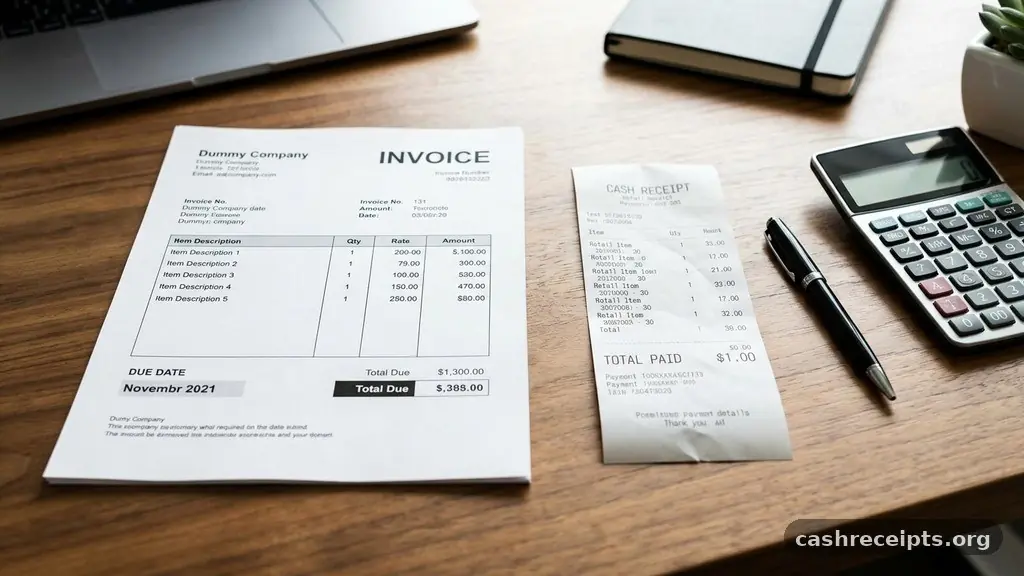
Understanding the distinction between a cash receipt vs invoice is essential for anyone running a small business or managing personal finances. While these two documents might seem similar because they both involve money, they serve entirely different purposes in the accounting lifecycle.
One is a request for payment, while the other acts as confirmation that a transaction has already occurred. Grasping the unique role of each document helps you keep your financial records organized and ensures your tax filings remain accurate throughout the fiscal year.
The primary difference lies in the timing of the document. An invoice is issued before a customer makes a payment, acting as a formal request for funds. A cash receipt, conversely, is provided after a payment has been successfully received, serving as proof that the debt has been settled.
If you are asking for money, you send an invoice. If you are confirming that you have already received money, you generate a receipt. This simple distinction prevents confusion and ensures that both the buyer and seller have a clear paper trail for every exchange.
Core Definitions of Invoices and Receipts
An invoice is a formal document sent by a service provider or vendor to a customer. It provides a detailed breakdown of the goods sold or services performed, the agreed-upon price, and the terms of payment.
Think of an invoice as a bill that notifies the client about how much they owe and when that payment is due. Most professional invoices include a unique identifier, such as an invoice number, to help both parties track the status of the request.
A cash receipt is a document issued by the seller to the buyer after a payment has been finalized. It confirms that the transaction is complete and that no further balance is owed by the client.
Unlike an invoice, which is a call to action for payment, the receipt acts as a historical record. It is vital for tax purposes and internal auditing, as it proves that funds moved from the customer to the business owner on a specific date.
The Timing of Issuance
The most reliable way to differentiate these two documents is to look at when they are created in the business process. An invoice is created at the start of the billing cycle.
It precedes the actual transfer of funds. By sending an invoice, you are setting expectations for the customer regarding what they are paying for and the timeline for delivery or payment.
A receipt is created only after the payment has been processed and verified. If a customer pays for a service in person, they expect a receipt immediately. If a client pays an invoice online, the system often triggers an automated receipt or a “payment confirmation” email.
The receipt effectively closes the loop on the invoice. You cannot issue a receipt for a payment that hasn’t happened yet, nor should you send an invoice after the customer has already paid in full.
Essential Details to Include
Both documents need specific information to be legally and operationally valid. An invoice must contain the seller’s contact details, the customer’s information, a unique invoice number, the date of issue, and the due date.
It also requires a clear list of items or services provided, unit prices, and the total amount due. Including payment methods, such as bank transfer details or links to an online payment portal, makes it easier for the client to settle the balance.
A receipt is slightly different in its focus. While it also lists the items bought and the total price, its most important feature is the confirmation of payment. A valid receipt must clearly state the date the payment was received, the amount paid, and the balance remaining, which should be zero.
It often includes a transaction ID or reference code that links back to the original invoice. This cross-referencing is a best practice for keeping your accounting software clean and accurate.
| Feature | Invoice | Receipt |
|---|---|---|
| Primary Purpose | Requesting payment | Confirming payment |
| Timing | Before payment | After payment |
| Action Required | Payment due | None |
| Status | Outstanding | Closed/Paid |
Why Keeping These Records Matters
Maintaining a clear distinction between these documents protects your business during tax season. When you file your income taxes, you need to prove your revenue, and receipts are the primary evidence that income was actually earned.
If you only keep invoices, an auditor might assume that all your billed work was paid, even if some clients never actually settled their balances. Keeping receipts ensures you only pay taxes on money that has actually hit your bank account.
For your customers, receipts are equally important for their own record-keeping. If they are a business themselves, they need these receipts to claim expenses and deduct them from their taxable income. Providing a professional, clear receipt improves your reputation and builds trust with your clients.
It shows that you are organized and that you value transparency in your financial dealings. You can find more information on record-keeping standards through the Internal Revenue Service official documentation.
Common Misconceptions
Many people mistakenly believe that an invoice can double as a receipt. While some businesses write “Paid” across an invoice to signify that funds were received, this is generally not considered a formal receipt.
A receipt should be a separate document generated once the payment is confirmed. Relying on marked-up invoices can lead to confusion, especially if you have recurring billing or complex payment plans.
Another common error is using these terms interchangeably in conversation. While it might seem like a minor linguistic slip, using the correct terminology prevents operational errors.
If an employee asks for an invoice and you send them a receipt, they cannot use that document to request a budget transfer from their finance department. Using the right term for the right document ensures that your internal workflows remain smooth and professional.
Best Practices for Your Workflow
To keep your business running effectively, you should automate as much of the invoicing and receipt process as possible. Modern accounting software can automatically generate a receipt the moment a payment is marked as “received” in your system.
This reduces human error and ensures that your customers get their confirmation immediately. Promptness in these tasks is a hallmark of a well-run organization.
Consider these steps to streamline your financial documentation:
- Use a unique number for every invoice to track history.
- Ensure every receipt is linked to a specific invoice number.
- Always include the date of payment on your receipts.
- Save digital copies of all issued invoices and receipts.
- Use templates that clearly distinguish between the two document types.
Frequently Asked Questions
Can I combine an invoice and a receipt?
While you should keep them as distinct documents for clarity, some systems allow you to send a “paid invoice.” This is essentially an invoice that has been updated to show a zero balance. However, in formal accounting, issuing a separate receipt is the preferred method for maintaining a clean audit trail.
What if a customer loses their receipt?
If a customer requests a copy of a lost receipt, you should be able to look it up in your accounting software using their name, the invoice number, or the date of the transaction. Providing a duplicate is a standard part of good customer service. Always mark the copy as a “Duplicate” to avoid any confusion if it is processed again.
Do I need to send a receipt for every payment?
Yes, providing a receipt is a professional courtesy and a requirement for good accounting. Even if a customer does not explicitly ask for one, sending a confirmation of payment helps them keep their own records. It also serves as a final touchpoint that reinforces your professionalism.
What happens if I forget to issue a receipt?
If you forget to issue a receipt, it can create a gap in your documentation, making it harder to reconcile your bank statements later. If you realize a receipt is missing, generate one as soon as possible and send it to the client. It is better to correct the oversight immediately than to leave your records incomplete.
Conclusion
Distinguishing between a cash receipt vs invoice is more than just a matter of terminology; it is a fundamental practice for any successful business. By treating invoices as requests for payment and receipts as confirmation of a completed deal, you create a transparent financial environment. This clarity helps you stay organized, simplifies your tax reporting, and builds lasting trust with your clients.
Start by reviewing your current billing processes to ensure you are using the right document at the right time. If you notice any overlap or confusion, take the time to update your templates and automate your workflows.
Your future self—and your accountant—will thank you for the extra effort. If you have any remaining questions about how to manage these documents in your specific industry, feel free to reach out and keep the conversation going.