
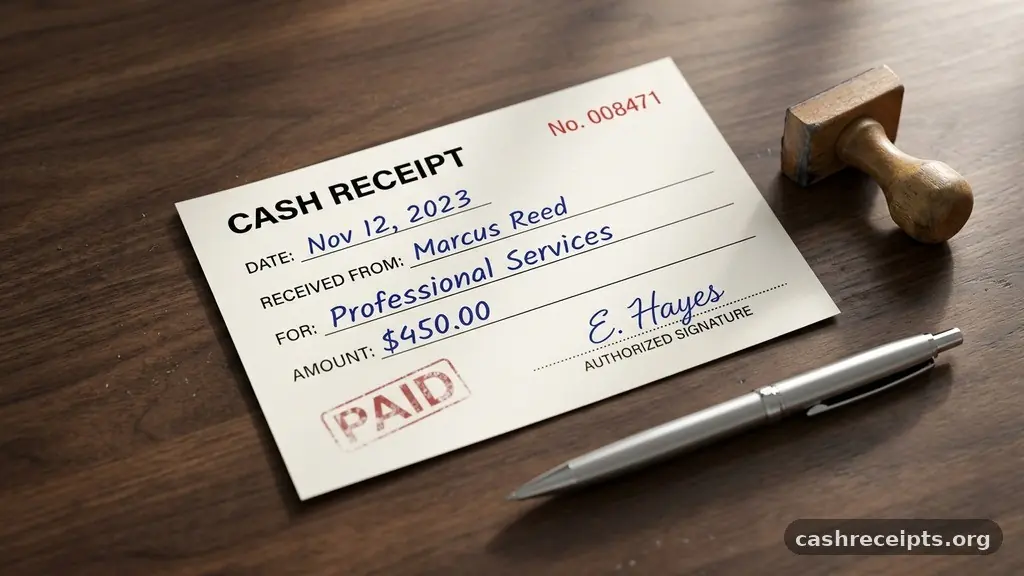
Learning the nuances of creating a Professional Cash Receipt for a Business ensures your financial records stay accurate and trustworthy. Whether you operate a small boutique or a service-based firm, documenting cash flow is a fundamental step in maintaining professional standards. A well-structured receipt serves as a binding record of a transaction, protecting both the seller and the customer from future disputes.
By implementing a standardized format, you simplify your accounting process and build lasting credibility with your clientele. This article provides the essential steps and best practices for building receipts that reflect the quality of your brand.
The Essential Components of a Valid Cash Receipt
The core of creating a Professional Cash Receipt for a Business lies in including specific, non-negotiable data points. Every receipt must clearly state the date of the transaction and a unique receipt number to allow for easy tracking within your accounting software. You should also include the full name and contact information of both the business and the customer to ensure there is no ambiguity regarding the parties involved.
A receipt needs a detailed description of the goods or services provided. Simply writing “payment” is insufficient for tax purposes; instead, list specific items, quantities, and their individual prices.
If you are charging sales tax, this must be broken out as a separate line item. Following these guidelines ensures that your documentation meets the requirements often expected by tax authorities during an audit.
The final total, clearly marked at the bottom, represents the culmination of all items and taxes. It is vital to state the payment method—in this case, “Cash”—to distinguish it from credit card or bank transfer records. Including a signature line for the person receiving the payment adds an extra layer of verification, confirming that the funds were indeed handed over and accepted.
Structuring Your Receipt Layout for Clarity
Designing a clean layout is just as important as the information you include. A cluttered receipt can confuse customers and make it difficult for your accountant to extract necessary data. Use a clear, legible font and ensure that the most critical information, such as the total amount and the date, is easy to spot at a glance.
Many businesses choose to use a professional logo at the top of their receipts to reinforce brand identity. This small touch makes your business look established and reliable.
You might consider using a two-column layout: one for the description of items and another for the corresponding monetary values. This structure allows the eye to follow the numbers down to the subtotal and final sum.
Spacing is another critical design element that often gets overlooked. Ensure there is enough white space between the header information and the list of items so that the document does not look cramped.
A well-spaced document is easier to read, which reduces the likelihood of errors during data entry. Consistency across all your receipts will help you maintain a polished, professional image.
Utilizing Digital Templates and Generators
You do not need to be a graphic designer to produce high-quality documentation. There are numerous digital tools available that allow you to generate receipts in seconds. Using a pre-made receipt template helps you avoid the common mistake of forgetting essential fields like tax identification numbers or contact details.
Web-based generators are particularly useful for small businesses that process cash transactions infrequently. These tools often allow you to input your business information once and then simply fill in the transaction-specific details for each new customer. This automation significantly reduces the time spent on administrative tasks while ensuring your records remain uniform.
If you prefer to keep your files local, you can easily build your own document using standard office software. Once you create a master layout, save it as a template that you can open and modify for every new payment. This approach gives you complete control over the design while maintaining the professional consistency required for effective financial management.
The Role of Receipts in Tax Compliance
Maintaining accurate records is the primary defense for any business owner during tax season. According to the Internal Revenue Service, keeping organized documentation of all revenue is a legal requirement for businesses. Every cash receipt you issue acts as a primary source document that supports the income reported on your tax returns.
Without these records, you risk being unable to substantiate your earnings if your business is ever selected for review. A professional receipt provides a clear audit trail that links every dollar of cash received to a specific service or product sold. This level of transparency is essential for proving the legitimacy of your revenue streams.
Beyond tax compliance, these records help you track your business growth over time. By reviewing your receipts, you can identify which products or services are most popular and which periods of the year generate the most cash flow. This data allows you to make informed decisions about inventory, staffing, and marketing strategies.
Best Practices for Managing Cash Transactions
Handling cash requires strict internal controls to prevent errors or loss. Always issue a receipt immediately at the time of the transaction, rather than promising to send one later. This practice sets a professional tone and ensures that the customer leaves with proof of their payment.
It is also wise to keep a duplicate of every receipt you issue. If you use a paper receipt book, the carbon copy serves as your permanent record. If you generate digital receipts, save them in a secure, organized folder system categorized by date or customer name.
Consistency is the hallmark of a professional operation. Regardless of the size of the payment, always follow the same procedure for every transaction. This habit minimizes the risk of missing information and ensures that your financial records are always ready for review.
Comparison of Receipt Storage Methods
Choosing the right way to store your records depends on the volume of transactions your business handles. Below is a comparison of common storage methods to help you decide which approach fits your workflow.
| Storage Method | Pros | Cons |
|---|---|---|
| Paper Receipt Books | Instant physical copy; no tech required. | Risk of loss; difficult to search. |
| Spreadsheet Tracking | Easy to calculate totals; searchable. | Requires manual entry; prone to error. |
| Cloud Accounting Software | Automated backup; professional reporting. | Subscription costs; learning curve. |
Common Mistakes to Avoid When Issuing Receipts
Even experienced business owners can fall into traps when documenting cash payments. One frequent error is failing to include the specific tax rate applied to the transaction. If you are required to collect sales tax, the receipt must explicitly show the amount collected so that it can be accurately reported to local authorities.
Another common oversight is providing vague descriptions for goods or services. Descriptions like “Miscellaneous” or “Service Fee” are not helpful during an audit and can lead to confusion for the customer. Always be as specific as possible, such as “Consulting Services – 2 Hours” or “Replacement Part – Model X12.”
Finally, ensure that all receipts are legible. If you are writing them by hand, use a pen with dark ink and write clearly.
A receipt that cannot be read is essentially useless. If a receipt is damaged, keep the original and staple it to a photocopy or a clear digital scan to preserve the information.
Frequently Asked Questions
Do I need to give a receipt for every cash payment?
Yes, providing a receipt for every transaction is a standard business practice. It protects your business by creating a clear record of income and provides the customer with proof of purchase.
What if a customer loses their copy of the receipt?
If a customer loses their copy, you should be able to look up the transaction in your records and provide a duplicate. This is why keeping an organized, chronological system of your receipts is so important.
Can I use a simple piece of paper to write a receipt?
While a plain piece of paper might technically work, it does not convey professionalism. Using a dedicated receipt template or a formal receipt book reflects better on your brand and reduces the chance of missing key information.
How long should I keep my cash receipts?
Most tax authorities recommend keeping financial records for at least three to seven years. It is best to check the specific regulations in your jurisdiction to ensure you remain compliant with local laws.
Is it better to use digital or paper receipts?
Digital receipts are generally more efficient because they are easier to store, search, and back up. However, paper receipts are perfectly acceptable as long as they are organized, legible, and archived properly.
Developing Your Financial Workflow
Creating a Professional Cash Receipt for a Business is a straightforward process that pays dividends in accuracy and trust. By ensuring each document contains the date, a unique identifier, clear descriptions, and the correct tax information, you protect your company’s financial integrity. Consistency in your documentation habits not only simplifies your tax obligations but also provides valuable insights into your company’s performance.
Start by choosing a format that works for your daily operations, whether it be a digital template or a physical receipt book. Once you establish a reliable system, you will find that managing your cash transactions becomes a seamless part of your business routine.
Maintaining these standards demonstrates to your customers that you value their business and take your professional responsibilities seriously. If you have questions about specific tax requirements in your area, consider consulting with a qualified accountant to ensure your internal processes are fully optimized for success.