
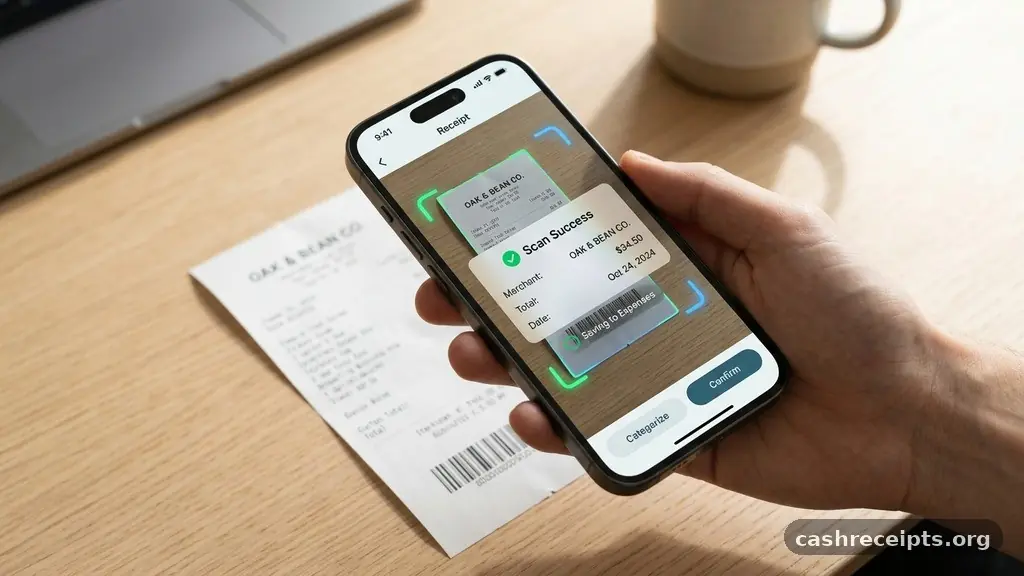
Understanding how mobile payment apps are changing receipt management reveals a significant shift in how both individuals and small business owners handle their daily finances. By digitizing paper trails at the point of sale, these platforms eliminate the clutter of physical slips and provide an instant, searchable record of every purchase.
This evolution in personal and professional accounting makes it easier to track spending habits while ensuring that tax-deductible expenses are never lost in a shoebox. Readers will gain insights into the technology driving this transition and how to leverage these tools for better financial organization.
The Mechanics of Instant Digital Capture
The most immediate way mobile payment apps are changing receipt management is through the automatic generation of digital records. Unlike traditional cash transactions where a paper slip is easily misplaced, modern payment interfaces link directly to your bank account or digital wallet. When you complete a transaction using services like Apple Pay, Google Pay, or specialized POS systems, the app often creates a metadata-rich entry immediately.
This entry typically includes the merchant name, the exact timestamp, the location of the purchase, and the final amount paid. Instead of waiting for a monthly bank statement to reconcile your spending, you have access to a real-time ledger on your smartphone. Many apps allow users to attach a photo of a physical receipt to the digital transaction record, creating a hybrid system that bridges the gap between old and new habits.
By centralizing these details, the software reduces the cognitive load of expense tracking. You no longer need to spend hours at the end of the month manually entering data into a spreadsheet. The software handles the heavy lifting, effectively turning your phone into a portable, automated filing cabinet for all your financial activity.
Security Protocols in Modern Receipt Storage
Concerns regarding the safety of digital financial data are common, yet the security architecture behind these apps is remarkably sophisticated. When you use a mobile payment app, your actual credit card number is rarely shared with the merchant. Instead, the system uses a process called tokenization, which replaces your sensitive data with a unique, one-time code.
This keeps your primary account information hidden from potential data breaches at the point of sale. Furthermore, most modern payment apps require biometric authentication—such as a fingerprint scan or facial recognition—to access your transaction history. This adds a crucial layer of protection to your stored receipts, ensuring that even if your phone is lost, your financial records remain inaccessible to unauthorized users.
Encryption standards for these services are generally aligned with those used by major financial institutions. According to the Federal Trade Commission guidance on mobile payment safety, users should always keep their app software updated to ensure they benefit from the latest patches and security protocols. Protecting your digital receipts is not just about convenience; it is about maintaining a secure, tamper-proof record of your financial life.
Integration with Accounting and Tax Software
The true power of mobile payment apps lies in their ability to export data to professional accounting tools. If you are a freelancer or a small business owner, the manual entry of receipts is a major source of administrative frustration. Modern apps now feature seamless API integrations with platforms like QuickBooks, Xero, or FreshBooks.
When a transaction occurs, the app can automatically categorize the expense based on the merchant category code. This means a lunch at a café is automatically flagged as “Meals and Entertainment,” while a purchase at an office supply store is categorized as “Office Expenses.” This automated sorting significantly reduces the time required to prepare tax filings.
By minimizing human error, these integrations ensure that your financial records are more accurate than manual bookkeeping ever could be. You can generate reports in seconds, showing your year-to-date spending or specific tax-deductible categories. This level of precision is invaluable when audit season arrives, as every transaction is backed by a verified, timestamped digital record.
Comparing Traditional and Mobile Receipt Systems
The transition from paper-based tracking to digital management represents a fundamental change in financial behavior. The following table highlights the primary differences between storing physical slips and utilizing app-based systems for your daily transactions.
| Feature | Physical Receipt Filing | Mobile Payment App |
|---|---|---|
| Accessibility | Requires physical access to storage | Available instantly on your phone |
| Searchability | Manual sorting required | Instant keyword search |
| Durability | Fades and tears over time | Permanent digital backup |
| Integration | Manual data entry necessary | Automated sync to accounting software |
As shown in the table, the advantages of moving toward digital solutions are clear. While physical receipts were once the only way to prove a business expense, the IRS and other tax authorities increasingly accept digital copies. Transitioning to a mobile-first approach does not just save space; it saves hours of tedious administrative work.
Key Benefits for Personal Finance Management
Beyond business, individuals are finding that mobile payment apps help them maintain better control over personal budgets. By viewing every receipt in a unified dashboard, users can identify “spending leaks”—those small, recurring purchases that add up over time. It is much easier to cut back on unnecessary coffee runs when you can see the cumulative cost of those transactions over a thirty-day period.
Many apps also offer visual charts and graphs that represent your spending habits in real time. Seeing a pie chart that breaks down your expenses by category can be an eye-opening experience for those who struggle with overspending. These tools provide the accountability needed to stick to a savings plan or debt-repayment strategy.
- Automated categorization of daily expenses.
- Real-time notifications for every transaction.
- Easy visual breakdown of monthly spending trends.
- Search functionality to find specific past purchases.
- Automatic cloud storage to prevent data loss.
This level of visibility is transforming how people approach their personal financial health. By removing the friction of paper receipts, these apps encourage users to engage with their finances more frequently and more honestly. A more informed user is almost always a more financially secure user.
Overcoming the Learning Curve
Adopting new technology can feel overwhelming, especially when it involves something as sensitive as your money. However, the interfaces for most modern payment apps are designed for simplicity. The initial setup usually involves linking your bank account or credit card once, and thereafter, the app runs in the background.
To get started, you might consider picking one primary app for your daily transactions to keep your data consolidated. Trying to track receipts across five different payment platforms will lead to fragmentation and frustration. Focus on one service that offers robust export features so you can eventually move that data to a more permanent storage solution if needed.
It is also helpful to perform a weekly “digital hygiene” check. Take five minutes every Sunday to review your transactions in the app, confirm that the merchant labels are correct, and verify that any digital receipts are attached to the right entries. This small, consistent habit prevents a backlog of work and keeps your financial records in excellent shape.
Future Trends in Transactional Record-Keeping
The future of receipt management is moving toward “smart receipts” that contain much more than just a purchase price. We are already seeing the emergence of item-level data, where a single digital receipt lists every individual product bought. Instead of seeing a generic “Grocery Store” charge, your app will eventually show you exactly what you purchased, the quantity, and even the nutritional information or warranty details.
This level of granular data will enable even more advanced AI-driven financial advice. Imagine an app that alerts you when a product you bought is subject to a safety recall, or one that tracks the expiration date of your electronics warranty automatically. As machine learning algorithms become more integrated into these platforms, the role of the user will shift from data entry to data analysis.
We are also likely to see more widespread adoption of universal digital receipt standards across retailers. Currently, some merchants support digital receipts while others do not, leading to a fragmented experience. As consumer demand for cleaner, more organized financial data grows, retailers will be forced to adopt standardized protocols that push data directly to the customer’s preferred financial app.
Frequently Asked Questions
What is the most effective way to store digital receipts for tax purposes?
The most effective method is to use a dedicated receipt tracking app or the built-in export features of your mobile payment platform. Ensure that your digital storage solution is backed up to the cloud and that you can export the data into a standard format like CSV or PDF for your tax professional.
Do I still need to keep physical copies of my receipts?
In most jurisdictions, tax authorities accept digital images of receipts as valid proof of purchase. However, it is always wise to keep the original paper copy if the item is a high-value purchase with a long-term warranty until that warranty expires.
Why do some mobile payment apps offer rewards for scanning receipts?
Some companies offer rewards because the data contained in your receipts is valuable for market research and consumer behavior analysis. By aggregating anonymized data, these companies can provide retailers with insights into purchasing trends, which they then share with you through points or cashback incentives.
Are mobile payment apps safe for managing my banking information?
Yes, they are generally very safe because they use tokenization and biometric security to protect your data. You should always ensure that you have two-factor authentication enabled on your account and that you never share your login credentials with anyone else.
How do I handle shared expenses with friends or family?
Many modern payment apps include built-in features for splitting bills or tracking shared expenses. These tools allow you to designate specific transactions as “shared,” making it easy to reconcile balances without needing to keep a separate paper record of who owes what.
Conclusion
The shift toward digital finance has fundamentally altered how we interact with our money. By leveraging the tools discussed, you can move away from the stress of paper clutter and toward a streamlined, automated, and secure way of tracking your financial life. How mobile payment apps are changing receipt management is not just a trend; it is a permanent improvement in how we maintain our records.
Start by auditing your current payment habits and selecting a platform that aligns with your specific needs. Consistency is the key to success, so build a small weekly habit of reviewing your transactions. By taking these steps today, you will save yourself countless hours of frustration and gain a clearer, more powerful understanding of your financial health for years to come.