
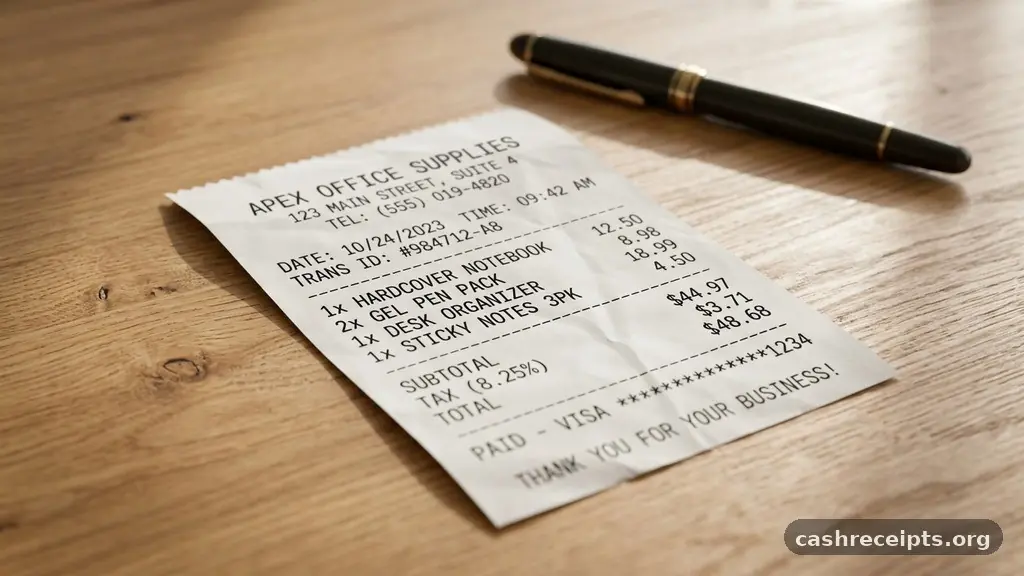
Knowing what information should be included on a cash receipt is essential for any business owner, freelancer, or individual handling payments. A proper record ensures transparency, builds trust with customers, and provides a clear audit trail for your financial books. Whether you are using a digital template or a traditional manual cash receipt book, clarity is your best friend.
By documenting every transaction correctly, you protect yourself against disputes and simplify your tax preparation process. This article explores the specific components that make a receipt valid and helpful, ensuring you stay organized and professional in every interaction.
Essential Components of a Valid Receipt
When you accept a payment, a formal document is the bridge between trust and proof. At its simplest, a receipt is a confirmation that funds have changed hands.
To be effective, it must answer the questions of who, what, when, and how much. Without these pieces, the document loses its utility for accounting and tax purposes.
The most critical element is the date of the transaction. You must clearly state exactly when the money was received to align with your bank deposits and bookkeeping software.
Following the date, you need a unique transaction or receipt number. This identifier allows you to track specific payments if a customer asks for a copy later or if you need to reconcile your accounts.
The names of both parties are equally vital. You must list the name of your business and the name of the person or entity providing the payment. This establishes who is accountable for the services or goods delivered.
Furthermore, a clear description of the items or services provided helps avoid confusion. Vague entries like “miscellaneous” or “payment” are insufficient for professional financial records.
Documenting the Financial Details
The monetary aspect of the transaction is the core reason the document exists. You must list the total amount paid in a prominent location on the page.
If the payment is a partial settlement, clearly note the remaining balance if applicable. This prevents disputes regarding whether a debt has been fully satisfied.
If your business charges sales tax, you must detail this separately. Many jurisdictions require you to break down the total cost into the base price and the tax amount.
This level of detail shows that you are compliant with local tax laws. It also provides the customer with proof of the tax they have contributed to the government.
Many businesses also choose to include the payment method. While the topic is cash, specifying the currency or noting if it was a physical cash deposit helps in balancing your till at the end of the day.
Consistency here is the key to maintaining a clean ledger. You can find more details on record-keeping standards from the Internal Revenue Service regarding business expenses.
The Importance of Professional Formatting
Using a consistent layout for your documentation creates a sense of reliability. Whether you are using a physical receipt pad or a digital template, the structure should remain predictable.
A professional design includes your business logo, address, and contact information at the top. This makes it easy for the recipient to reach you if they have questions about their purchase.
The layout should be clean and easy to read. Avoid cluttering the document with unnecessary text or images that detract from the core information.
Use bold headings for labels like “Total Amount” or “Received From” to guide the reader’s eye. When the information is organized logically, it signals to the customer that you take your business operations seriously.
Best Practices for Layout
- Place the business header clearly at the very top of the document.
- Ensure the receipt number is large and legible for quick reference.
- Use a table format to list individual items, quantities, and their respective costs.
- Leave a dedicated space at the bottom for an authorized signature.
- Provide a clear area for notes if the transaction involves specific terms or conditions.
Managing Manual Cash Records
In many small businesses or craft markets, manual cash receipt books are the standard. They provide an immediate, tangible record that doesn’t rely on internet connectivity or complex software.
However, they require discipline to ensure every copy is legible. Always press firmly when writing so the carbon or carbonless copy is clear.
You must ensure that the duplicate copy stays in the book for your personal records. If you tear out both copies, you lose the audit trail that makes the receipt useful for your accounting.
It is a common mistake to misplace these slips, leading to gaps in your financial reporting. Treat the receipt book as a permanent ledger that you store safely for several years.
When you finish a receipt, verify that all fields are filled before handing it over. If you make a mistake, void the receipt by writing “VOID” across it in large letters and keep both the original and the copy.
This maintains the integrity of your numbering sequence. Never simply throw away a used receipt, as auditors may look for missing numbers in your sequence.
Comparing Receipt Formats
Different business models call for different levels of detail on a receipt. A retail store might need automated printing, while a consultant might prefer a simple document. The following table illustrates how different transaction types influence what should be documented.
| Feature | Retail Receipt | Service Receipt | Manual Cash Slip |
|---|---|---|---|
| Itemized List | Required | Optional | Brief Description |
| Tax Calculation | Automated | Calculated | Hand-written |
| Customer Info | Often Omitted | Usually Required | Required |
| Signature | Not Required | Often Included | Standard Practice |
Addressing Common Accounting Needs
In an accounting context, receipts serve as the primary evidence for your income. When you deposit cash into your business bank account, the total should match the sum of your issued receipts for that period.
This process is known as reconciliation. If your bank deposit is lower than your recorded income, you must investigate the discrepancy immediately.
Receipts also help in identifying the source of your funds. If you have multiple revenue streams, you can categorize your receipts by department or service type.
This allows you to generate reports that show which areas of your business are performing the best. Without this data, you are essentially guessing about your profitability.
Furthermore, a receipt serves as a contract of sorts. It defines the point at which ownership of a good or responsibility for a service is transferred.
If a customer returns an item, the receipt is their proof of purchase. By maintaining a robust system, you ensure that your business remains resilient against errors and potential fraud.
Common Questions About Receipts
Is a signature required on a cash receipt?
While not strictly mandatory in every legal jurisdiction, a signature adds a layer of authenticity and professionalism. It confirms that an authorized representative of the business acknowledged the payment. For larger transactions, a signature is highly recommended to prevent future disputes.
What if I lose a receipt for a cash payment?
If you are the recipient and lose a receipt, you should immediately create a duplicate from your records if possible. If you are the payer, you may need to provide other evidence of the transaction, such as an email correspondence or a bank statement showing a corresponding cash withdrawal. Always keep digital backups to avoid this issue.
How long should I keep copies of these documents?
Most tax authorities recommend keeping financial records for at least three to seven years. These records include your sales receipts, invoices, and bank deposit slips. Storing them in a fireproof box or a secure digital cloud service is a wise precaution.
Can I use a simple notepad instead of a receipt book?
You can, but it is not recommended. A proper receipt book provides a pre-printed format that ensures you don’t forget to include essential details like the date, receipt number, and tax information. A simple notepad often lacks the structure required for a professional audit trail.
Do I need to include my address on the receipt?
Yes, including your business address is standard practice. It provides the customer with your physical location and establishes legitimacy. It also helps in cases where the customer needs to return an item or contact your office for follow-up questions.
Maintaining Long-Term Financial Health
Consistent documentation is the backbone of a thriving enterprise. By clearly defining what information should be included on a cash receipt, you create a standard that protects your hard-earned income.
Whether you are dealing with a small cash deposit or a significant payment, the principles of accuracy and detail remain the same. This habit of diligence does more than satisfy tax requirements; it builds a culture of accountability within your business.
As you refine your process, remember that simplicity is often the most sustainable path. Use templates that work for your specific needs, and never skip the step of verifying your numbers before finalizing a transaction.
When you treat every payment with the respect it deserves, you gain a clearer picture of your financial success. Start implementing these habits today, and you will find that your books stay balanced and your peace of mind grows alongside your business.