
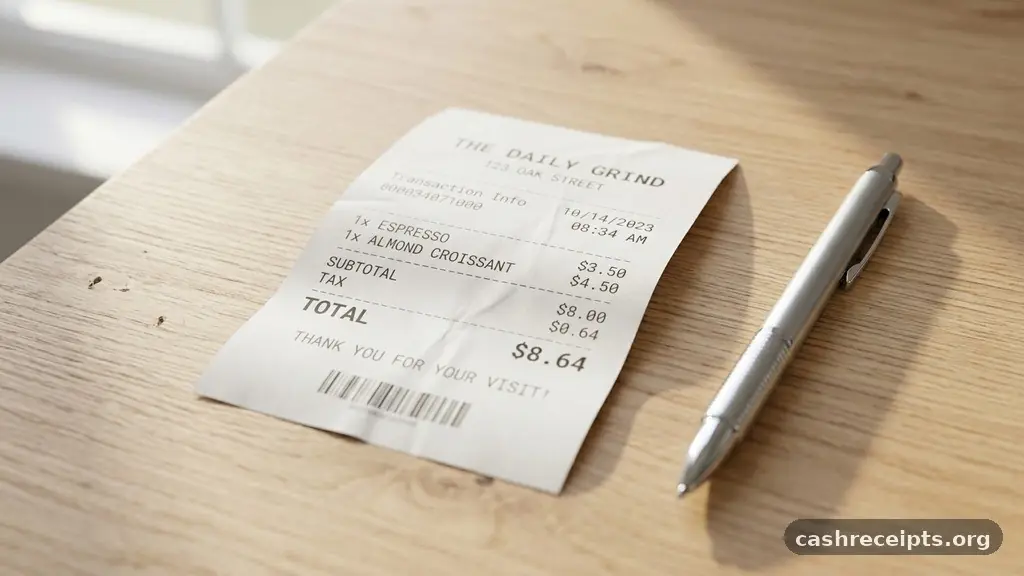
Understanding what is a cash receipt? A simple guide for beginners is essential for anyone handling money in a professional or casual setting. At its core, a cash receipt is a written document that confirms a payment has been received for goods or services rendered.
It serves as a vital bridge between the payer and the receiver, ensuring that both parties have a clear record of the financial exchange. Whether you are a small business owner, a freelancer, or just managing personal transactions, knowing how to generate and store these documents correctly provides peace of mind and protects your financial interests.
Defining the Cash Receipt

A cash receipt is a formal document issued by a seller to a buyer immediately after a cash transaction occurs. It serves as proof that a specific amount of money changed hands for an agreed-upon purpose.
Without this document, verifying that a payment actually took place can become difficult, especially if a discrepancy arises later. You should view it as a foundational element of sound financial management.
When you issue a receipt, you are essentially documenting the completion of a commercial agreement. It confirms the date, the identity of both parties, and the exact sum involved.
For the buyer, it is a safeguard against claims that payment was never made. For the seller, it provides a necessary entry for internal accounting systems and tax documentation.
Think of it as a snapshot of a single moment in time. When money is exchanged, memories can be unreliable, but a signed or stamped piece of paper remains consistent.
It does not matter if the transaction is for a large business deal or a small personal sale; the principle remains identical. Using a receipt simple enough for anyone to understand helps maintain transparency and trust in every interaction.
Key Elements Found in Every Receipt
To be legally and functionally effective, a receipt must contain specific information. If these elements are missing, the document may not hold up during an audit or a dispute. You should always ensure these details are clearly printed or written on every slip you issue.
- Date of Transaction: The exact day, month, and year the money was handed over.
- Payer Name: The full name of the person or entity providing the funds.
- Receiver Name: The name of the person or business entity accepting the money.
- Total Amount: The numerical value of the payment, preferably written in both words and figures.
- Description of Goods or Services: A brief explanation of what the payment covers.
- Payment Method: A note specifying that the payment was made in cash.
- Signature: The signature of the person receiving the money to authenticate the document.
Including these details turns a scrap of paper into a reliable financial record. If you are using a pre-printed receipt book, these fields are often already laid out for you.
If you are creating your own, ensure you do not skip any of these sections. Consistency is the hallmark of a professional approach to record-keeping.
Why Accurate Documentation Matters
Maintaining accurate records is the backbone of any successful business. When you track cash receipts, you are building a history of your income that becomes invaluable come tax season. Without these records, you might find it impossible to prove your revenue to authorities or investors.
Consider the implications of an audit. If the tax office asks you to verify your reported income, your cash receipts act as your primary evidence.
They link your bank deposits back to actual customer transactions. If you cannot produce this link, you might face penalties or be unable to claim legitimate business expenses.
Beyond taxes, these documents help you analyze your business health. By reviewing your receipts, you can see which products or services are generating the most cash flow. You can identify trends in customer behavior and adjust your operations accordingly.
It is not just about compliance; it is about having the data needed to make informed, strategic decisions. You can learn more about general accounting standards from the Financial Accounting Standards Board.
Comparing Cash and Digital Payment Records
While digital payments are increasingly common, cash transactions still hold a significant place in the economy. Managing paper receipts requires a different mindset compared to automated digital logs. The following table highlights the differences between these two common methods.
| Feature | Cash Receipt | Digital Payment Record |
|---|---|---|
| Creation Speed | Requires manual writing or printing | Instant and automated |
| Verification | Physical signature required | Digital timestamp and encryption |
| Storage | Physical filing system needed | Cloud or database storage |
| Risk of Loss | High (paper can be misplaced) | Low (backed up electronically) |
The manual nature of cash receipts means they are more prone to human error, such as miswriting an amount or forgetting to sign. However, they provide an immediate, tangible confirmation that many customers still prefer.
Digital records are more efficient, but they lack the physical presence of a signed paper receipt. Understanding both allows you to choose the best method for your specific situation.
How to Write a Proper Receipt
Writing a receipt does not have to be a complex task. Start by clearly labeling the document as a “Receipt” at the top so there is no confusion. Enter the date prominently, as this is the first thing anyone checking the document will look for.
Next, write the full name of the person who paid you. Then, clearly state the amount received. It is a good practice to write the amount in both numeric form, like $50.00, and written form, like “Fifty and 00/100 dollars,” to prevent any tampering.
Describe the transaction clearly. Instead of just writing “Service,” write “Consulting services for June” or “Sale of used office chair.”
Finally, sign your name at the bottom. This signature is the most critical part, as it validates that you have received the funds and acknowledged the transaction.
Organizing Your Financial Records
Once you have issued or received a receipt, you must store it properly. A disorganized pile of papers will not help you when you need to reconcile your accounts. You should develop a system that works for your volume of transactions.
For small volumes, a simple accordion folder labeled by month is sufficient. For larger volumes, you might need a digital scanner to convert paper receipts into searchable PDF files. This dual approach—keeping the original and having a digital copy—is the safest way to ensure you never lose critical financial data.
Make it a habit to file your receipts at the end of each business day. Waiting until the end of the month makes the task overwhelming and increases the risk of losing a slip.
If you are a business owner, treat this process as a non-negotiable part of your daily routine. Your future self will thank you when tax time arrives.
Common Mistakes to Avoid
Many beginners fall into traps that can cause headaches later. One of the most frequent errors is failing to provide a receipt at all. Even if the customer does not ask for one, it is professional and prudent to offer it.
Another common mistake is writing incomplete information. A receipt that lacks a date or a signature is essentially useless in a dispute. Always double-check that every field is filled in before handing the document over.
If you make a mistake, do not scribble over it. Instead, start fresh with a new slip to maintain clarity and professionalism.
Storing receipts in a place where they can be damaged by heat, moisture, or sunlight is another pitfall. Over time, thermal paper receipts can fade, making the text unreadable.
If you rely on these, photocopy them or digitize them immediately. Taking these small precautions will save you from major frustrations in the future.
Frequently Asked Questions
Is a cash receipt legally binding?
A properly filled-out cash receipt serves as a legal record of a transaction. It provides evidence that a payment was made and accepted, which can be used in court or during tax audits to verify financial history.
What should I do if I lose a cash receipt?
If you lose a receipt, try to reconstruct the transaction using other records like bank statements, emails, or invoices. If you are the issuer, you can check your duplicate copy if you used a receipt book with carbon copies.
Do I need to keep receipts for personal expenses?
While not required for most personal purchases, keeping receipts is helpful for warranty claims, returns, or tracking your personal budget. For tax-deductible items, keeping them is absolutely mandatory.
Can I create my own cash receipt templates?
Yes, you can easily create your own templates using word processing or spreadsheet software. Just ensure you include all the essential fields like date, payer, amount, and signature to keep them professional and valid.
How long should I keep my cash receipts?
Most financial experts recommend keeping business receipts for at least three to seven years. This covers the period during which tax authorities can typically audit your filings.
Final Thoughts
Mastering the basics of what is a cash receipt? A simple guide for beginners provides you with the tools needed to manage money with confidence. By documenting every payment, you protect yourself against errors and create a reliable paper trail for your financial life.
Remember that consistency and attention to detail are your best allies in this process. Whether you are using a physical receipt book or a digital system, the goal remains the same: clarity and accountability.
Start implementing these practices today to build a stronger, more organized financial future. If you stay diligent with your record-keeping, you will find that managing your cash transactions becomes a natural part of your daily routine.